Article: How to Tell Genuine Satya Incense from Fakes
How to Tell Genuine Satya Incense from Fakes
Nag Champa is the most copied incense in the world. The blue box is imitated outright, "Nag Champa" is printed on packs that have never been near Bengaluru, and even genuine-looking Satya can come from a grey-market chain with no idea where it has been stored. As an authorised supplier we get asked about this a lot, so here is what to look for — and what the two Satya companies mean for the pack in your hand.
First, there are two Satyas
Satya began as one family company, Shrinivas Sugandhalaya, founded in 1964 by K.N. Satyam Setty. Since 2014 there have been two: Shrinivas Sugandhalaya (BNG) LLP in Bengaluru, led by the founder's son Balakrishna Setty, and a Mumbai company of the same family name. Both make Nag Champa. Both are real. But they are different factories with different blends, and a pack from one is not the same product as a pack from the other. Everything we sell is the Bengaluru range.
Five things on a genuine Bengaluru pack
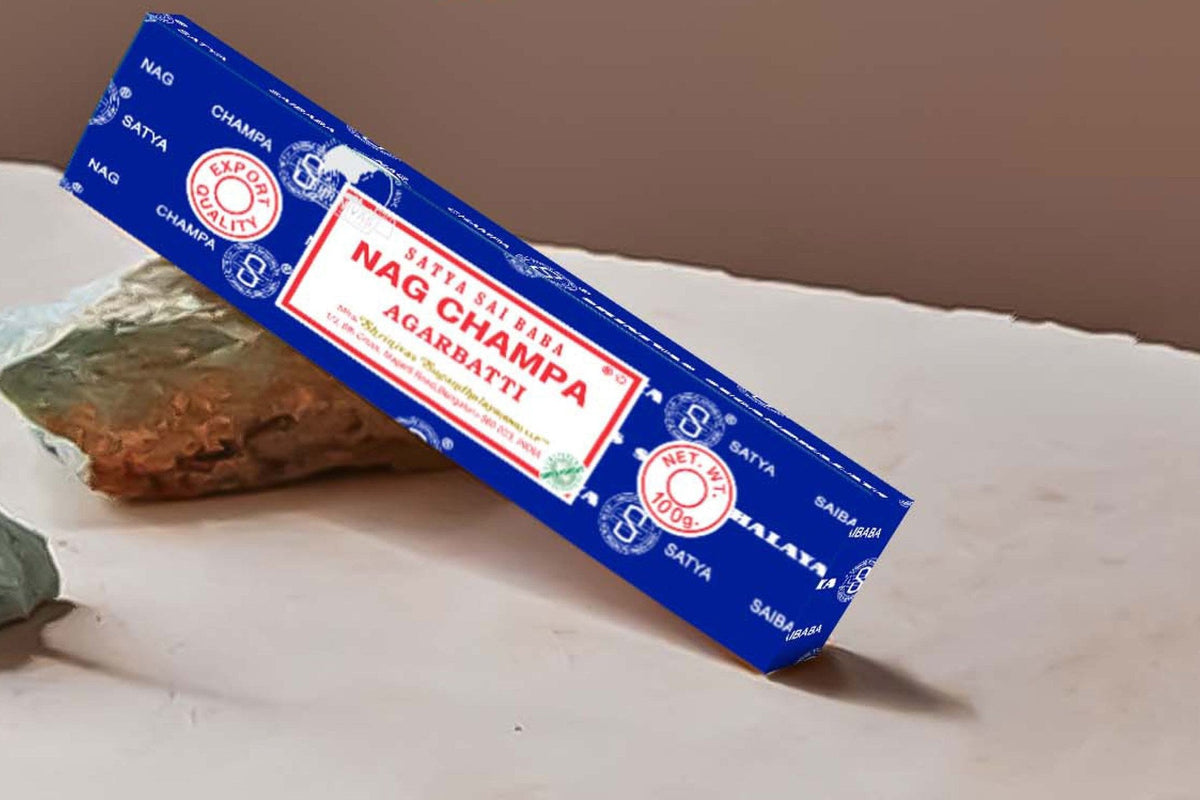
- The two logos. The oval blue Satya logo and the small green Earth logo — a seedling in a square. The manufacturer tells us all of its packaging carries both. No Earth logo, not Bengaluru.
- The manufacturer's name. Look for "Shrinivas Sugandhalaya (BNG) LLP" and the Bengaluru address printed on the back. Fakes often copy the front perfectly and fumble the back: misspellings, a vague "Made in India", no address.
- The "Export Quality" seal and net weight. A circular Export Quality mark on the front and a clear net weight (15 g on the standard pack). Counterfeit packs are frequently underweight and the print of the seal is blurred.
- Print quality. Genuine boxes are sharply printed on decent card, with the tiny background text ("SATYA SAI BABA NAG CHAMPA…") legible. Fuzzy text, off colours and thin card are the usual giveaways.
- The sticks themselves. Real masala sticks are thick, slightly soft, dark and matt, with a hand-rolled texture, and they smell strongly of the blend before lighting. Thin, glossy, uniform sticks that smell of perfume rather than paste are dipped incense in a copied box.
What it smells like when it's wrong
Genuine Nag Champa is sweet, resinous and woody, and the smoke is soft. Fakes tend to be sharper and more synthetic — an alcohol-perfume note on lighting, more acrid smoke, and a scent that vanishes within the hour instead of settling into the room. If it gives you a headache, it is usually not the real thing (or it is, and you have burned three at once — one stick is enough).
Where you buy it matters more than anything
Marketplaces mix genuine and imitation listings under the same product name, and a very low price is the strongest single warning sign — single packs offered for pennies are rarely what they claim. The safest route is a seller who can tell you which Satya house their stock comes from and show a paper trail back to it. We can: Inbound To Anglia Ltd holds a letter of authorisation from Shrinivas Sugandhalaya (BNG) LLP confirming that we supply their products through their authorised distributor. Every box we sell is factory-sealed, and every pack carries the Satya and Earth logos. The Satya page has the company story; trade customers can request sight of the letter through the wholesale page.
Storing it so it stays good
Masala incense is a paste, and it dries out. Keep opened packs closed in a drawer away from heat and sunlight; a pack kept well will smell right for a year or more, while a pack left on a windowsill fades in months. Old stock from a slow-moving retailer can be "genuine but tired" — another reason to buy from somewhere that turns stock over quickly, as we do.
Quick questions
Is the Mumbai Satya fake? No — it is the other half of the same family. It is simply a different factory and blend from the Bengaluru range we stock.
Is cheap the same as fake? No — but on a marketplace listing shared by many sellers you cannot always tell whose stock you will receive, which is why buying from a named, authorised supplier is the surest route.
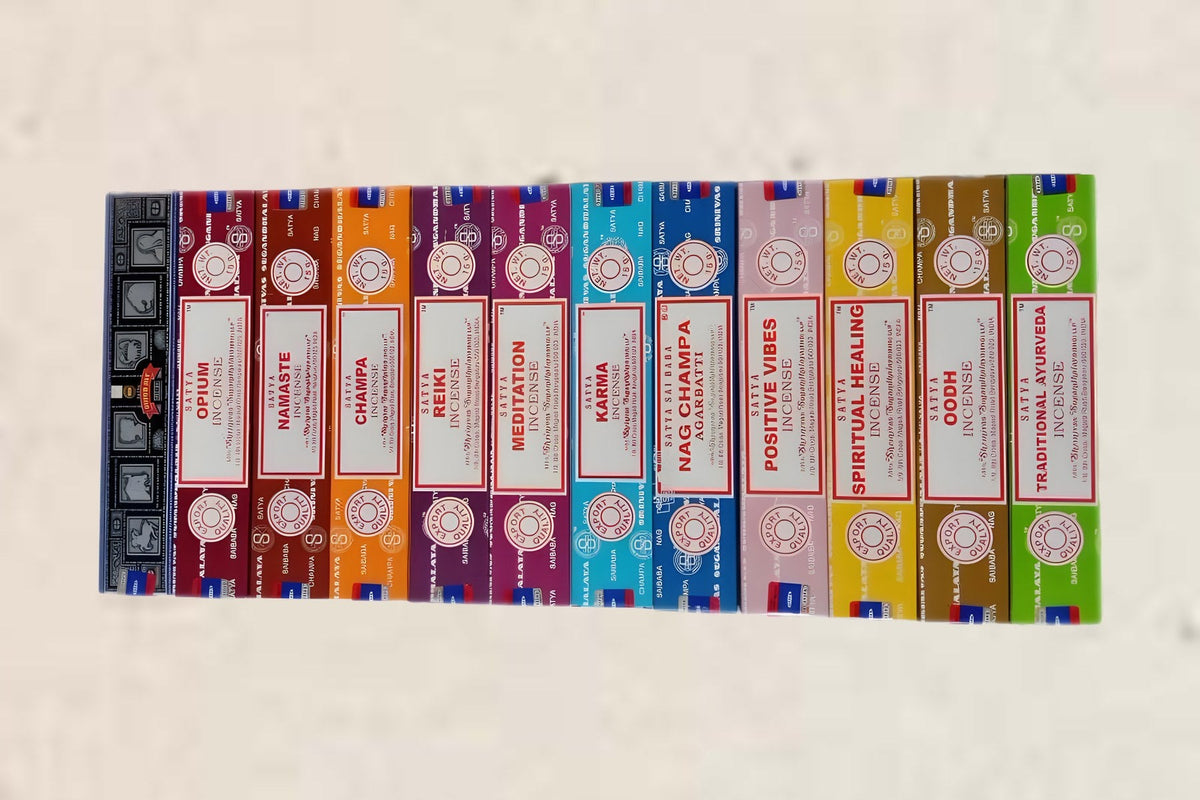
Ready to try the real thing? The 12-fragrance set, Series 1 and the Floral gift set are all genuine Bengaluru Satya, and two sets ship free next day. Shop the Satya sets →