Article: How to Use Backflow Incense Cones (And Why Yours Might Not Be Working)
How to Use Backflow Incense Cones (And Why Yours Might Not Be Working)
There is a particular kind of disappointment in lighting your first backflow incense cone, waiting for the smoke to cascade down your burner like a little waterfall, and watching it drift straight up to the ceiling instead. If that has happened to you, you have almost certainly not done anything wrong — backflow cones are simply a bit fussier than ordinary incense, and once you know why, they work every time.
What makes a backflow cone different
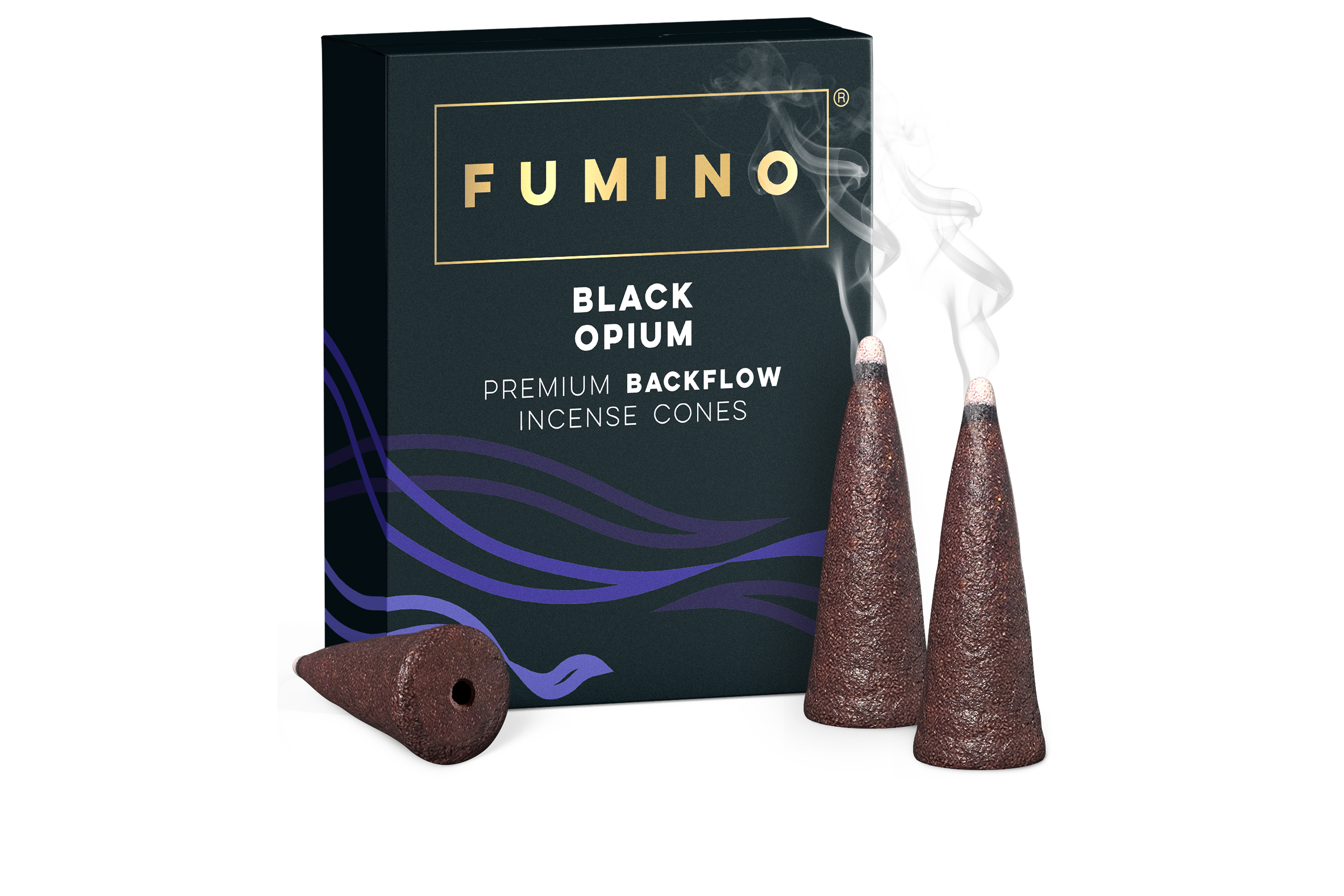
An ordinary incense cone is solid. A backflow cone has a hollow channel running up through its centre, from the base to near the tip. That hollow is the entire trick. As the cone burns, the smoke it produces is cooler and denser than the air around it, and instead of rising it sinks down through the channel, out of the hole in the base, and over the edge of your burner.
This is why a backflow cone needs a backflow burner — one with a hole in the plate that lines up with the hole in the cone, and a sloped surface for the smoke to run down. Standing a backflow cone on an ordinary flat dish will simply block the channel, and you will get normal upward smoke. Our backflow cones are shaped specifically for waterfall burners; if you want cones for a traditional flat holder or plate, the standard incense cones are the ones you want.
Lighting one properly
Hold a flame to the very tip of the cone for a good ten to fifteen seconds. This is longer than feels natural, and it is where most people go wrong. You are not trying to set the cone alight so much as establish a small, stable ember that will keep burning on its own.
Once the tip has caught, blow the flame out gently. You should be left with a glowing orange tip and a thin thread of smoke. Wait a few seconds more — the cone needs to build up enough smoke to start sinking — then place it on the burner plate, making sure the hole in the base sits directly over the hole in the plate.
Give it thirty seconds or so. The first wisps will drift upwards while the channel fills, and then the smoke will begin to pour downwards. Each of our cones burns for roughly twenty-five minutes.
The three reasons it is not working
It keeps going out. Almost always an under-lit cone. Go back to the flame and hold it there longer than you think you need to. A draught will also extinguish a cone that has not fully established itself, so light it away from open windows and fans.
The smoke goes up, not down. Either the holes are not aligned, or there is a draught. Backflow smoke is delicate — a moving air current will lift it away before it has a chance to sink. Close the door, let the room settle, and try again.
The effect starts and then stops. As the cone burns down, ash can collect in the channel and block it. A gentle tap to clear the base usually restores the flow. It is also worth cleaning the hole in your burner plate every so often, as residue builds up there over time.
Getting the most from the fragrance
Backflow cones are doing two jobs at once — the visual effect and the scent — and the conditions that suit one do not always suit the other. Still air gives you the best waterfall, but a completely sealed room will concentrate the fragrance more than most people want. The compromise most of our customers settle on is to close everything for the first five to ten minutes, enjoy the effect while the scent builds, then open a window slightly.
Scent choice matters more than you might expect with backflow, because the smoke stays low and pools around the burner rather than dispersing upward. Heavier, warmer fragrances suit this beautifully — Oudh, Saffron Sandalwood and Coco Cinnamon all have the density to match the visual drama. Lighter fragrances like Spring Meadow can get slightly lost.
A note on safety
Backflow burners get hot, and the smoke carries downward onto whatever surface the burner is standing on. Use a heat-resistant base, keep the burner away from anything that might catch, and never leave a burning cone unattended. As with all incense, ventilate the room and keep pets out of the direct path of the smoke.
If you would like to try the effect across different fragrances before committing to a favourite, the backflow bundles bring six scents together in one set.