What Does Nag Champa Smell Like?
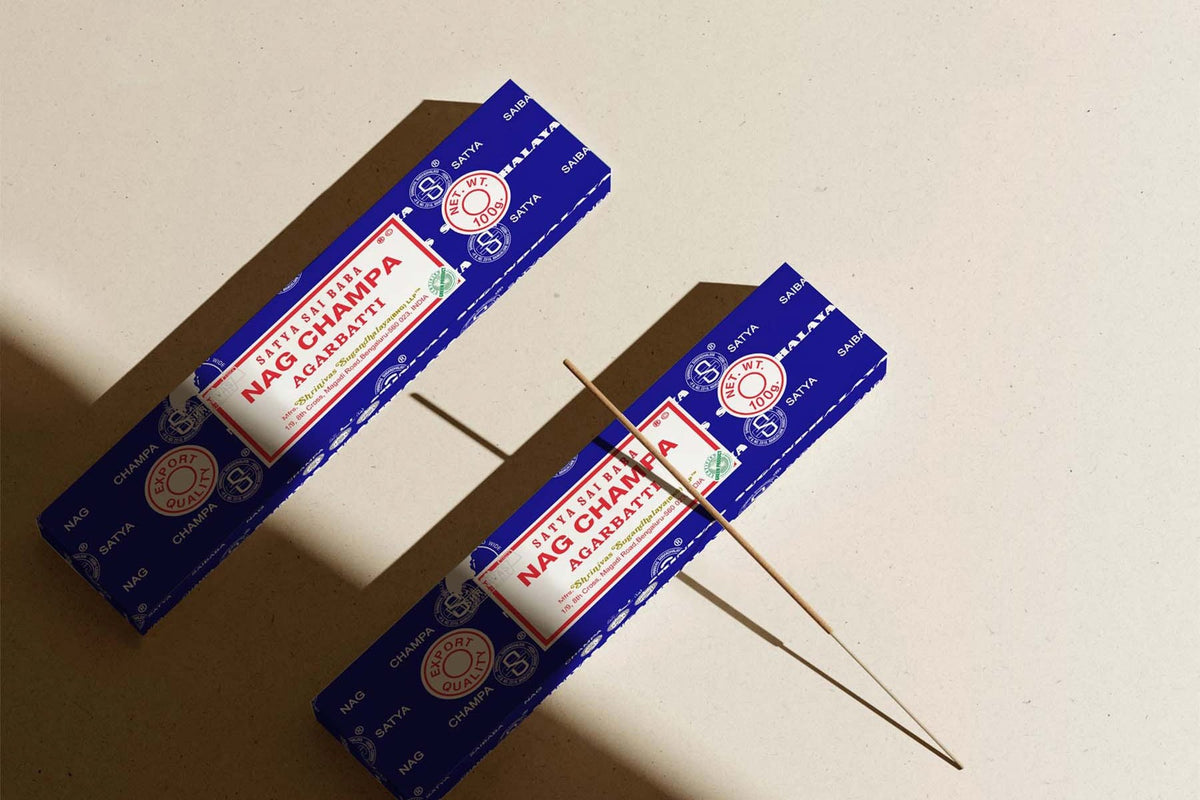
Ask ten people what incense smells like and eight of them will describe Nag Champa without knowing its name. It is the sweet, resinous, faintly powdery smoke that hangs around yoga studios, record shops and the back rooms of anyone who was a student in the 1990s. Satya's Nag Champa, in the blue box with the Sai Baba portrait, has been the reference version since 1964, and it is the one this guide is about.
The short answer
Nag Champa smells of sandalwood and champa flower: creamy, woody sandalwood underneath, a sweet, honeyed, slightly tropical floral on top, and a resinous, almost balsamic thread running through both that gives it its weight. It is sweet without being sugary, heavy without being cloying, and it has a very long tail — a room still smells gently of it the next morning.
What's actually in it
Nag Champa is a masala incense, which means the fragrance is built into a paste rather than sprayed onto a plain stick. Satya's paste is a blend of sandalwood powder, champa flower, halmaddi (a soft, sweet tree resin traditional to the recipe), honey and a mix of herbs and spices, hand-rolled onto a bamboo core. The exact formula is the manufacturer's own; the character comes from the way those ingredients behave when they burn together:
- Sandalwood gives the smooth, milky, woody base — the part that lingers on fabric.
- Champa (the flower of the magnolia champaca tree, sometimes confused with frangipani) is the sweet floral top note, closer to jasmine and orange blossom than to rose.
- Halmaddi and honey are the sticky, resinous middle: think amber, a little vanilla, a faint earthiness. This is what makes Nag Champa feel "old" and temple-like rather than perfumed.
What it smells like in the room
Lit, the first minute is mostly smoke and sweetness. After five minutes the sandalwood settles in and the room takes on a warm, slightly dusty, church-and-spice atmosphere. It is strong — one 15 g stick will scent a large living room, and for a bedroom half a stick is plenty. It suits evenings, rainy afternoons and anything meditative; it is not a breakfast smell.
If you like Nag Champa you will usually also like Satya's Super Hit (softer, sweeter, more powdery) and Spiritual Healing (rounder, more sandalwood). If you find it too heavy, the answer is a cleaner, lighter stick rather than a lighter Nag Champa — which is where Fumino's own Simply Sandalwood sits: the same wood, without the resin and honey.
Nag Champa vs the rest of the Satya range
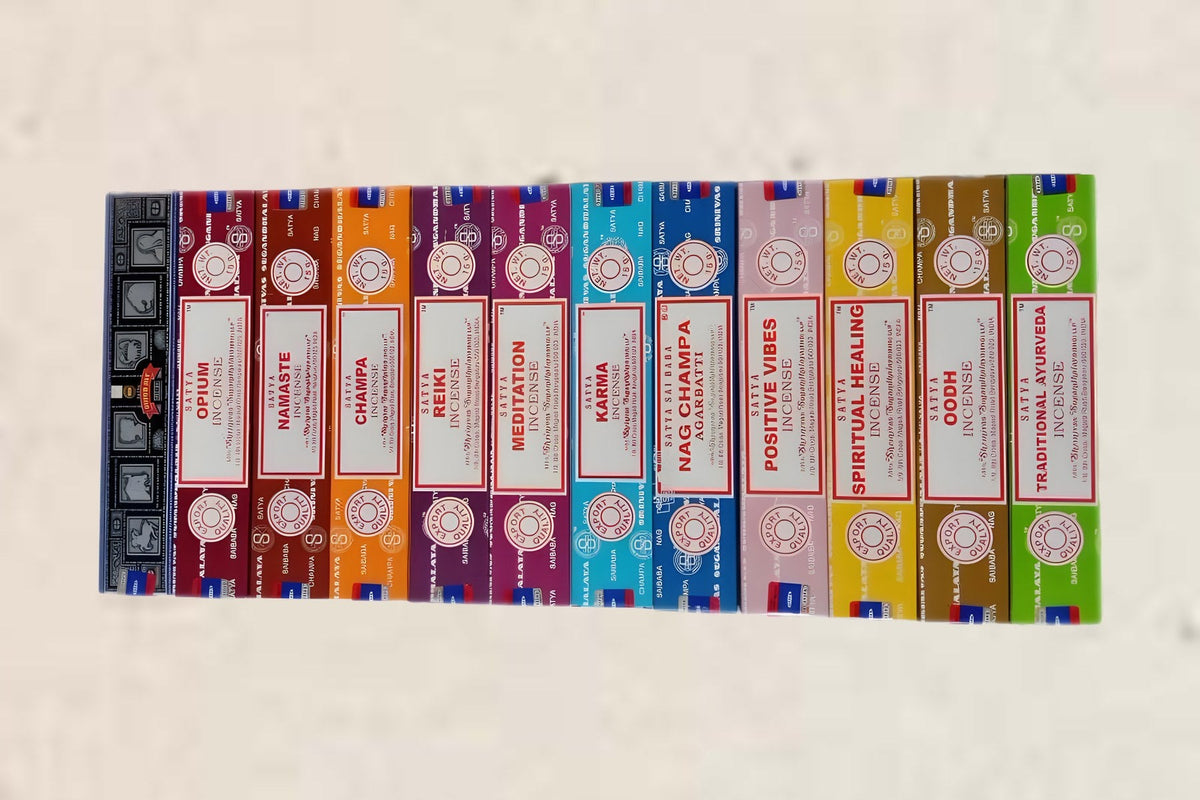
Nag Champa is the anchor of every Satya set we sell. In the 12-fragrance set it sits alongside Super Hit, Oodh, Champa on its own, Opium, Reiki, Meditation and five others; in Series 1 it is joined by frankincense, myrrh, dragon's blood and the white florals; the Floral gift set pairs it with sandalwood, patchouli and lavender. Buying a set is the cheapest way to find out which direction you lean — under £1 a pack, and two sets ship free next day.
Is it the "real" Nag Champa?
There are two Satya companies now, one in Bengaluru and one in Mumbai, and a great deal of imitation Nag Champa besides. The Bengaluru-made packs carry both the oval Satya logo and the small green Earth logo; we are an authorised supplier of that range and every box we sell is factory-sealed. How to tell genuine Satya from fakes goes through the details, and the Satya page has the story of the company.
Quick questions
Is Nag Champa a floral or a woody scent? Both, in that order: floral on top, woody underneath, with a resinous sweetness holding them together.
How long does a stick burn? A 15 g Satya stick burns for around 45 minutes; the scent stays in the room for hours after.
Does it smell like frangipani? Champa is often called "frangipani" on packaging, but the flower in Nag Champa is magnolia champaca — sweeter and less coconut-like than true frangipani.
What goes well with it? Sandalwood, patchouli and oudh from the same tradition; from Fumino, Oudh and Indian Spices sit closest.